WebGPU & TSL
Three.js now supports WebGPU.
With TSL, writing shaders is easier, and the same shader works with both WebGL and WebGPU.
- 21 lessons
- 23 hours of video
- 2 chapters
- 13 projects
Three.js now supports WebGPU.
With TSL, writing shaders is easier, and the same shader works with both WebGL and WebGPU.
TSL stands for Three.js Shading Language. It's an easier way to write shaders that work both with WebGPU and WebGL.
We used to write complex GLSL and try not to break the material's default behavior.
Now a few lines are enough to enhance it.
const material = new THREE.ShaderMaterial({
  vertexShader: `
    varying vec2 vUv;
    void main() {
      vUv = uv;
      gl_Position = projectionMatrix *
        modelViewMatrix * vec4(position, 1.0);
    }`,
  fragmentShader: `
    varying vec2 vUv;
    void main() {
      gl_FragColor = vec4(vUv.x, vUv.y, 0.0, 1.0);
    }`
})const material = new MeshBasicNodeMaterial()
material.colorNode = vec3(uv(), 0)const material = new THREE.ShaderMaterial({
vertexShader: `
varying vec3 vNormal;
varying vec3 vViewDirection;
void main() {
vNormal = normalize(normalMatrix * normal);
vec4 mvPosition = modelViewMatrix * vec4(position, 1.0);
vViewDirection = normalize(- mvPosition.xyz);
gl_Position = projectionMatrix * mvPosition;
}`,
fragmentShader: `
varying vec3 vNormal;
varying vec3 vViewDirection;
void main() {
float fresnel = pow(
1.0 - dot(vNormal, vViewDirection), 3.0);
gl_FragColor = vec4(vec3(fresnel), 1.0);
}`
})const material = new MeshBasicNodeMaterial()
const fresnel = dot(positionViewDirection, normalView)
.oneMinus().pow(3)
material.colorNode = vec3(fresnel)const material = new THREE.ShaderMaterial({
uniforms: { uTime: { value: 0 } },
vertexShader: `
uniform float uTime;
void main() {
vec4 worldPosition =
modelMatrix * vec4(position, 1.0);
float wave = sin(uTime + worldPosition.y) * 0.15;
vec3 newPosition = position + normal * wave;
gl_Position = projectionMatrix *
modelViewMatrix * vec4(newPosition, 1.0);
}`
})
// In the render loop
material.uniforms.uTime.value = timer.getElapsed()const material = new MeshBasicNodeMaterial()
const wave = time.add(positionWorld.y).sin().mul(0.15)
material.positionNode =
positionLocal.add(normalLocal.mul(wave))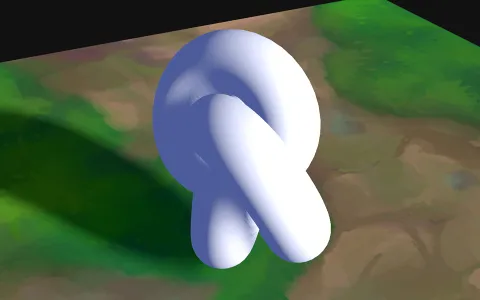
One-time payment, access for life, whichever one you pick.
Already have Three.js Course?
Log in to unlock member pricing
There's a lot of Three.js and TSL content out there. This is what you get here.
No. The Shaders chapter is the only real prerequisite. If you have been through it, you are ready to start.
Not at all. Most techniques carry over, and understanding what is underneath is exactly what lets you spot the mistakes the abstraction layer hides.
They are rebuilt in TSL and pushed further than the originals, with new features, new tricks, and the compute-driven parts GLSL made too painful.
TSL falls back to the WebGL backend automatically. You write it once, and support is already broad.
Yes. The add-on has its own quizzes and its own certificate of completion, next to your Three.js Journey one.
It is stable now. Many projects rely on it and big changes are not expected, and the lessons are kept up to date as Three.js releases land.
on Trustpilot
Already have Three.js Course? Log in to unlock member pricing
